
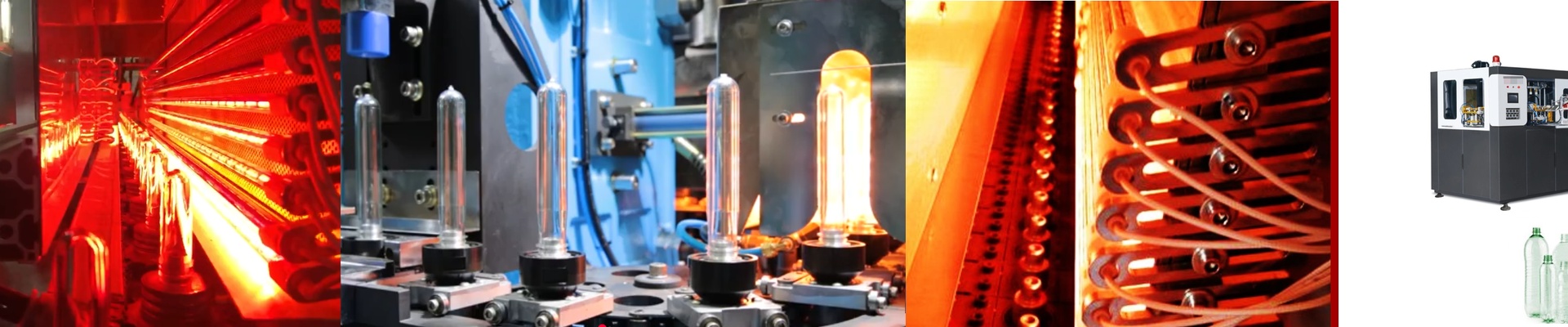
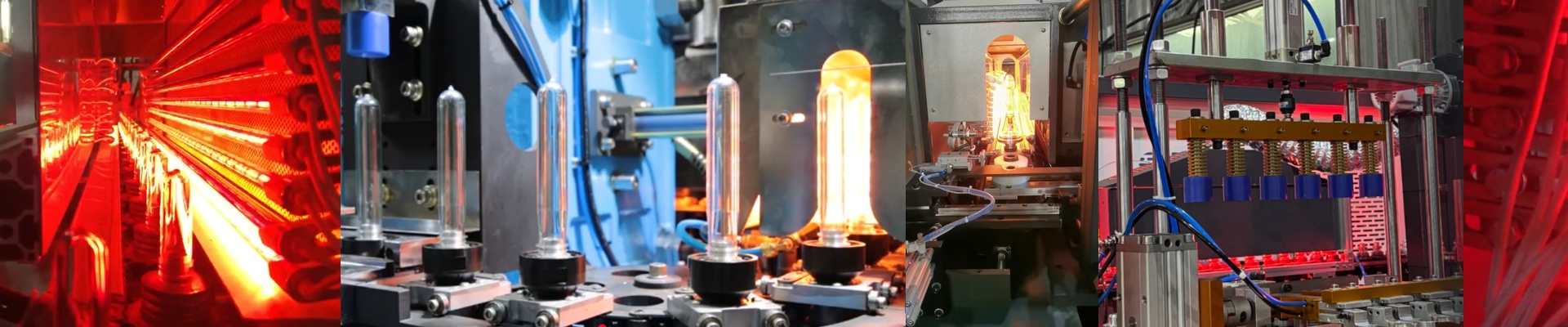
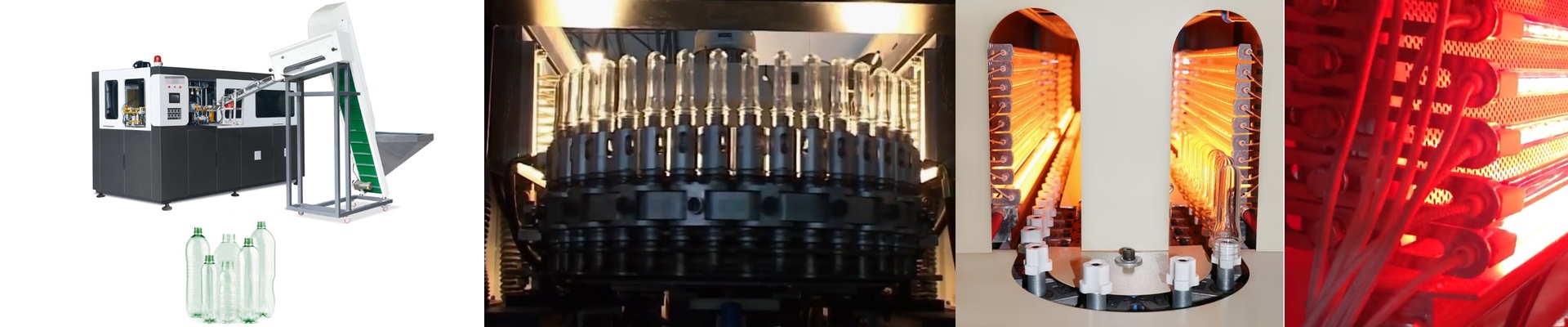
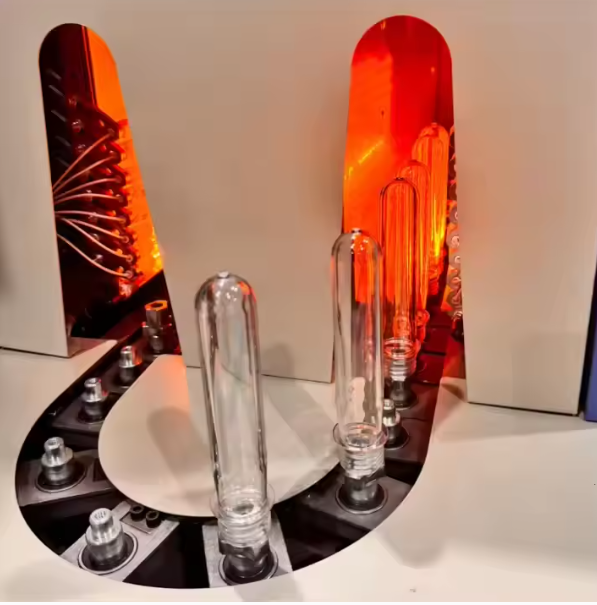
Every blow molding plant manager has lived this. The line is humming, you’re close to target, and then the heating assembly throws a fault. Preforms come out underheated, scrap starts climbing, and you’re paging maintenance before the shift is out. The hit isn’t just the part. It’s the lost cycles, the resin going down the drain, and the shipments you miss. When the heating system can’t keep up, the bottleneck is right there on the floor. What matters, technically We build the heating assembly around how stretch blow molding actually works, using short-wave infrared emitters in a focused quartz setup. The geometry follows the preform neck and body so energy absorption is rapid and even. The specs aren’t arbitrary. We match OEM voltage, power density, and mounting interfaces—R7s connectors, exact lamp lengths, and reflector alignment—so the unit drops in clean. Preform surface temperature stays stable because emitter output holds steady over 5,000+ hours with minimal drift. On the blow molding floor, time and temperature set the pace. Our IR assemblies heat faster, which lets you shorten the heating tunnel dwell and squeeze in more cycles per hour. That’s more throughput without adding machines. Energy use drops because the IR energy goes straight into the preform, not the air around it. Fewer lamp changes mean less maintenance and fewer stoppages. Operators see fewer rejects from inconsistent stretch because the heating profile holds, shift after shift. Installation is straightforward on most machines—Sidel, Krones, SIPA, Husky, SACMI, and Nissei ASB—but reflector alignment is the make-or-break detail. If the focal point is off, you’ll get hot spots and weak blows. Expect a short commissioning window to tune the power curve to your preform wall thickness and cycle time. And keep the emitter window clean; dust and film buildup will cut output. We give clear setup guidance so you avoid those pitfalls.