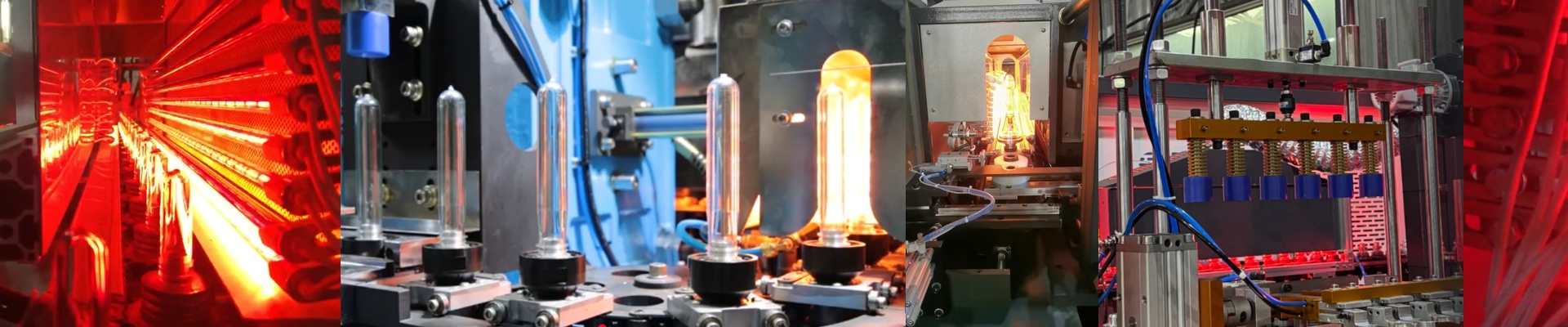
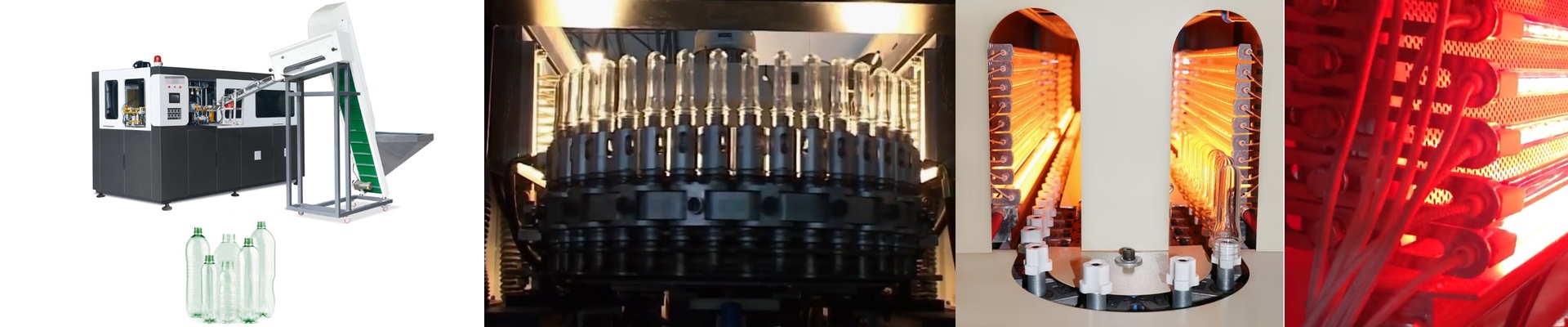
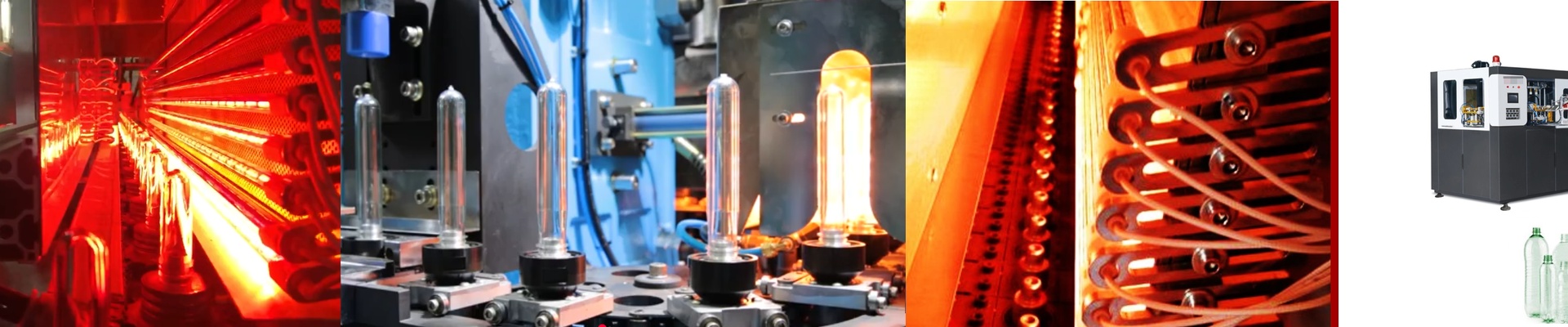
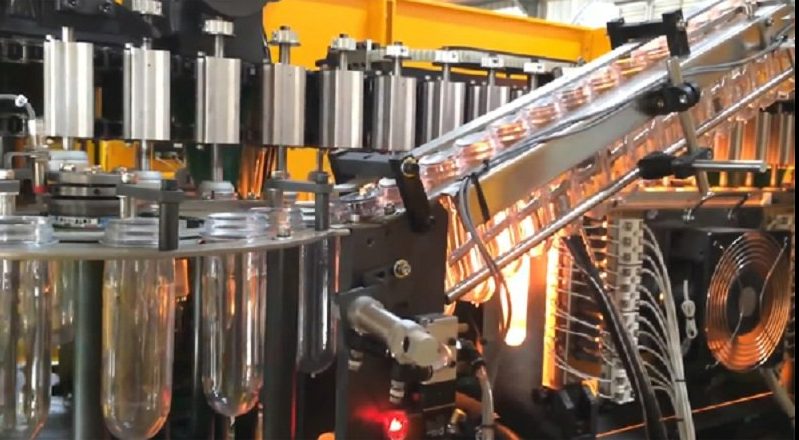
On the plant floor, the heating tunnel is where the clock ticks loudest. You’re running a custom color PET preform—deep cobalt, amber, or an opaque white—and the temperature across the preform wall is never even. Some zones run hot, others lag. You chase setpoints, tweak power, and still get streaks, flash, or weak blow-up. Meanwhile, every cycle keeps burning time. When heating is off, the whole line pays: more scrap, more rework, and more unplanned stops. Infrared lamps spec’d for standard clear PET often miss the mark with custom colorants. That’s why a purpose-built custom color PET preform infrared lamp matters. It’s engineered to deliver repeatable heat absorption across the spectrum your preform actually reflects, so you hit the right parison temperature with less guesswork.
What matters, technically
We build these lamps around the realities of stretch blow molding: fast cycles, tight tolerances, and absorption that shifts with color.
- **Spectrum choice:**Short-wave infrared (tungsten-halogen) and near-infrared (NIR) emitters are the workhorses for PET preform heating. They pack high intensity into a compact form, giving rapid response and precise zone control. Medium-wave options suit layouts where longer dwell and broader heat profiles are preferred.
- **Power density matched to the task:**Typical ratings run 1 kW to 4 kW per lamp, with 120 V or 230 V options, depending on your blow molder’s cabinet and wiring. Power is chosen to match preform wall thickness, cycle rate, and tunnel geometry.
- **Physical fit:**Lengths and diameters are built to OEM envelopes, with common quartz tube diameters that match standard reflector housings. End-fit connectors are specified to your machine—R7s, G38, G22, or custom terminal blocks—so you plug in and run without modifying mounts.
- **Fast-response filaments:**Halogen filaments and NIR elements come up to operating temperature within seconds. That keeps the heating tunnel in sync with indexing, so parison temperature stays consistent shot-to-shot.
- **Targeted spectral output:**Custom color preforms absorb differently than clear. We tune the spectral profile to improve heat penetration and uniformity, cutting down the hot spots and cold bands that cause uneven wall distribution. None of this is academic. It translates into stable heating curves, fewer parameter swings, and predictable performance when you change colors.
Why this works on the machines you run
You’re operating a blow molder—Sidel, Krones, SIPA, Husky, SACMI, or Nissei ASB—and your schedule mixes clear, tinted, and opaque PET. The heating section has to handle all of it without slowing down. A custom color PET preform infrared lamp gives you:
- **Better temperature uniformity:**The right spectrum and power density reduce variation across the preform wall. That means more even stretch during blow-up and fewer stress marks.
- **Faster changeovers:**With faster thermal response and stable setpoints, you spend less time dialing in after a color switch. The line gets back to full speed quickly.
- **Energy use you can measure:**Infrared heats the preform directly, not the air around it. In many setups, operators see lower kWh per thousand bottles because less heat is lost to the surroundings.
- **Fewer lamp swaps:**We design for long life—expect 5,000+ hours in normal operation with controlled output drift. That means fewer maintenance windows spent swapping emitters and less downtime.
- **Compatibility with your machine:**The lamps are engineered to fit OEM heating tunnels and reflectors, and to match the electrical and mounting specs of the machines you run. No field fabrication. In practice, that means more consistent bottle weight, fewer rejects due to heating issues, and a heating section that behaves predictably when the color changes.
The stuff that matters on the line
A lamp is only as good as the system around it. Here’s what we see in real production.
- **Reflector condition matters:**Even the best emitter underperforms if reflectors are oxidized or misaligned. Replace reflectors at the same time as the lamp if you want the full benefit.
- **Keep the glass clean:**Dust, oil, and PET dust on the quartz tube rob output. Wipe-down schedules reduce output loss and stabilize heating.
- **Watch for thermal mismatch:**If you switch between very light and very dark preforms, you may need to adjust zone power or dwell. Plan the changeover sequence to minimize swings.
- **Electrical compatibility:**Match voltage, connector type, and terminal rating exactly. Mismatched connectors create arcs and hot spots. If your machine uses a proprietary socket, use the specified interface.
- **Temperature control:**Use a pyrometer or thermal camera to measure actual parison temperature, not just tunnel setpoint. Closed-loop control keeps lamp output matched to the process.
- **One practical trade-off:**Short-wave and NIR lamps deliver fast response and high intensity, but they demand clean mounting surfaces and stable alignment. If the tunnel is worn or the mounting hardware has play, you can see drift. Fix the hardware first, then the lamp. If you’re specifying replacements for Sidel, Krones, SIPA, Husky, SACMI, or Nissei ASB blow molders, we can match the lamp to the machine envelope and the process needs of your custom color PET preforms. Send us your machine model, tunnel layout, and the colors you run. We’ll deliver an infrared emitter that fits, performs, and keeps your heating section under control.